Qi 7.5W vs Qi2 15W vs Qi2.2 25W: Is It Really That Much Faster?
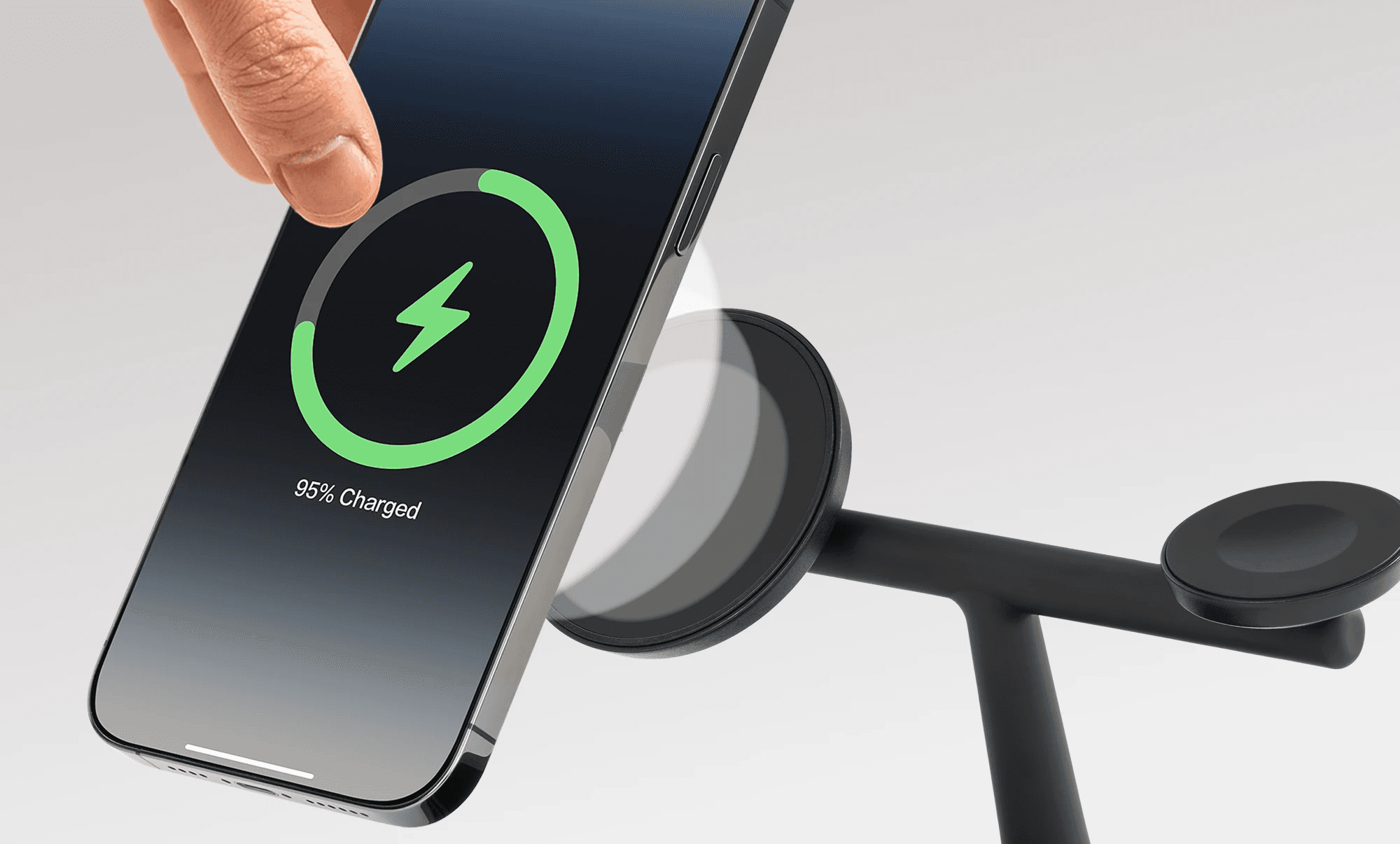
When you see 7.5W → 15W → 25W, it’s easy to assume each step is way faster.
In real life, it’s not that simple—because of heat and battery protection, the total time from 0–100% doesn’t shrink nearly as much as the watt numbers suggest.
Below is a simple, “just-the-important-bits” breakdown you can actually use.
1. The three levels in plain English
For modern iPhones and many Android phones:
Qi (the OG/original) –
iPhone max: usually 7.5W (even though the spec is stated as 15W)
Typical use: basic wireless pads and stands
Qi2 (magnetic, v2.0) –
iPhone & newer Android: up to 15W
Think “MagSafe-style” magnetic chargers
Qi2.2 / Qi2 25W (new spec) –
Newest standard: up to 25W
Designed to give faster early charging with better efficiency
On paper, 25W looks 3× “stronger” than 7.5W. In practice, full charge times are much closer than that.
2. What real tests actually show
Example A – Qi 7.5W vs 15W MagSafe (similar to Qi2 15W)
AppleInsider tested an iPhone on a 7.5W Qi pad vs Apple’s 15W MagSafe (which is effectively a 15W magnetic Qi-style charger):
7.5W Qi pad → about 2h 40m to go from 0–100%
15W MagSafe (15W) → about 2h 10m for 0–100%
So doubling the rated power (7.5W → 15W) did not halve the time. It shaved off ~30 minutes, not 1+ hour.
Example B – Qi2.2 / 25W in the real world
The Wireless Power Consortium (the people who define Qi) says:
Qi2 25W can charge a smartphone from 0–50% in about 30 minutes.
ChargerLab tested Apple’s 25W MagSafe with an iPhone 16 Pro Max and measured:
50% in 34 minutes
100% in 2h 23m
So again:
The first half is clearly faster (around 30–35 minutes to 50%)
But the 0–100% time is still a little over 2 hours, very similar to older 15W magnetic tests and not wildly different from that 2h 10m MagSafe result on an earlier iPhone.
Different phones have different battery sizes, so you shouldn’t compare these numbers “scientifically” across models—but the pattern is clear: Qi 7.5W, Qi2 15W, and Qi2 25W all tend to land in the “roughly 2–2.5 hours” ballpark for a full wireless charge. The gap is measured in tens of minutes, not hours.
3. Why higher wattage doesn’t scale linearly
If 25W is 3× 7.5W, why isn’t it 3× faster?
Because your phone actively protects itself:
Peak power is only at the start
In the 25W MagSafe test, ChargerLab saw 29W only for the first few minutes.
After that, power drops step by step: ~21W → ~10W → ~4W, etc., even though the charger could deliver more.
Heat makes the phone slow itself down
Wireless charging wastes some power as heat.
When the phone warms up, the phone dials back the charging rate to protect the battery.
The last 20% is slow on purpose
Near 80–100%, every modern phone (wired or wireless) slows charging right down to protect the battery chemistry.
So no matter how high the advertised wattage is, the tail end of charging always drags.
Put simply: High wattage helps a lot from 0–50%. It helps less from 50–80%, and almost not at all from 80–100%.
4. What this means for you
When higher wattage matters
Short top-ups (e.g., 15–30 minutes before heading out)
Qi2 15W or Qi2 25W can get you from low to “comfortable” much faster.
25W especially shines here: ~30–35 minutes to 50% in lab tests.
When it doesn’t matter much
Overnight / desk charging
If your phone sits on a charger for 6–8 hours, there is almost no practical difference between:
Qi 7.5W
Qi2 15W
Qi2.2 / Qi2 25W
In all cases, you’ll wake up at 100%, and the extra heat from “faster” charging may not be worth it if you care about long-term battery health.
5. The simple takeaway
If we boil all the data down into one statement:
Qi2 and Qi2.2 (25W) absolutely feel faster for quick top-ups, but for a full 0–100% wireless charge, real-world tests show that Qi 7.5W, Qi2 15W, and Qi2 25W are all in the same “a bit over 2 hours” range because heat and battery protection slow things down.
So if you mostly charge overnight or at your desk, a well-designed cooler 7.5W charger can be perfectly fine—and gentler on your battery—while the ultra-fast Qi2/Qi2.2 options are best for people who constantly need quick bursts of power, not necessarily full charges.
If you happen to be shopping for a beautiful charger for your office and bedroom, the ZenStand 3-in-1 Magnetic Wireless Charger can be a perfect choice for you and always keep your phone charged.
When you see 7.5W → 15W → 25W, it’s easy to assume each step is way faster.
In real life, it’s not that simple—because of heat and battery protection, the total time from 0–100% doesn’t shrink nearly as much as the watt numbers suggest.
Below is a simple, “just-the-important-bits” breakdown you can actually use.
1. The three levels in plain English
For modern iPhones and many Android phones:
Qi (the OG/original) –
iPhone max: usually 7.5W (even though the spec is stated as 15W)
Typical use: basic wireless pads and stands
Qi2 (magnetic, v2.0) –
iPhone & newer Android: up to 15W
Think “MagSafe-style” magnetic chargers
Qi2.2 / Qi2 25W (new spec) –
Newest standard: up to 25W
Designed to give faster early charging with better efficiency
On paper, 25W looks 3× “stronger” than 7.5W. In practice, full charge times are much closer than that.
2. What real tests actually show
Example A – Qi 7.5W vs 15W MagSafe (similar to Qi2 15W)
AppleInsider tested an iPhone on a 7.5W Qi pad vs Apple’s 15W MagSafe (which is effectively a 15W magnetic Qi-style charger):
7.5W Qi pad → about 2h 40m to go from 0–100%
15W MagSafe (15W) → about 2h 10m for 0–100%
So doubling the rated power (7.5W → 15W) did not halve the time. It shaved off ~30 minutes, not 1+ hour.
Example B – Qi2.2 / 25W in the real world
The Wireless Power Consortium (the people who define Qi) says:
Qi2 25W can charge a smartphone from 0–50% in about 30 minutes.
ChargerLab tested Apple’s 25W MagSafe with an iPhone 16 Pro Max and measured:
50% in 34 minutes
100% in 2h 23m
So again:
The first half is clearly faster (around 30–35 minutes to 50%)
But the 0–100% time is still a little over 2 hours, very similar to older 15W magnetic tests and not wildly different from that 2h 10m MagSafe result on an earlier iPhone.
Different phones have different battery sizes, so you shouldn’t compare these numbers “scientifically” across models—but the pattern is clear: Qi 7.5W, Qi2 15W, and Qi2 25W all tend to land in the “roughly 2–2.5 hours” ballpark for a full wireless charge. The gap is measured in tens of minutes, not hours.
3. Why higher wattage doesn’t scale linearly
If 25W is 3× 7.5W, why isn’t it 3× faster?
Because your phone actively protects itself:
Peak power is only at the start
In the 25W MagSafe test, ChargerLab saw 29W only for the first few minutes.
After that, power drops step by step: ~21W → ~10W → ~4W, etc., even though the charger could deliver more.
Heat makes the phone slow itself down
Wireless charging wastes some power as heat.
When the phone warms up, the phone dials back the charging rate to protect the battery.
The last 20% is slow on purpose
Near 80–100%, every modern phone (wired or wireless) slows charging right down to protect the battery chemistry.
So no matter how high the advertised wattage is, the tail end of charging always drags.
Put simply: High wattage helps a lot from 0–50%. It helps less from 50–80%, and almost not at all from 80–100%.
4. What this means for you
When higher wattage matters
Short top-ups (e.g., 15–30 minutes before heading out)
Qi2 15W or Qi2 25W can get you from low to “comfortable” much faster.
25W especially shines here: ~30–35 minutes to 50% in lab tests.
When it doesn’t matter much
Overnight / desk charging
If your phone sits on a charger for 6–8 hours, there is almost no practical difference between:
Qi 7.5W
Qi2 15W
Qi2.2 / Qi2 25W
In all cases, you’ll wake up at 100%, and the extra heat from “faster” charging may not be worth it if you care about long-term battery health.
5. The simple takeaway
If we boil all the data down into one statement:
Qi2 and Qi2.2 (25W) absolutely feel faster for quick top-ups, but for a full 0–100% wireless charge, real-world tests show that Qi 7.5W, Qi2 15W, and Qi2 25W are all in the same “a bit over 2 hours” range because heat and battery protection slow things down.
So if you mostly charge overnight or at your desk, a well-designed cooler 7.5W charger can be perfectly fine—and gentler on your battery—while the ultra-fast Qi2/Qi2.2 options are best for people who constantly need quick bursts of power, not necessarily full charges.
If you happen to be shopping for a beautiful charger for your office and bedroom, the ZenStand 3-in-1 Magnetic Wireless Charger can be a perfect choice for you and always keep your phone charged.
Related Articles
Check out our full product line
Check out our full product line

🇨🇦 A Canadian Company
© 2026 Futura Gear Inc. FTNT, the illustrated FTNT logo, and Footnote Accessories Co. are trademarks of Futura Gear Inc. All rights reserved.
© 2026 Futura Gear Inc. FTNT, the illustrated FTNT logo, and Footnote Accessories Co. are trademarks of Futura Gear Inc. All rights reserved.
🇨🇦 A Canadian Company