The Solo Traveler's Quiet Confidence: Smart Safety Tactics for Unfamiliar Cities
The thrill of stepping off a train in a city where no one knows your name is unmatched. But so is the sudden, stomach-dropping panic when you realize your daypack is still on that train, rolling away without you. Or the slow creep of anxiety as you walk a dim, unfamiliar street back to your Airbnb, phone battery dying.
Solo travel rewards the brave, but it also asks a lot. Here are the safety tactics seasoned travelers actually use, plus one small piece of gear that quietly does the work of three.
Securing Your Valuables Without Looking Like a Target
The first rule of travel safety: don't advertise. Flashy luggage tags, brand-name backpacks, and obvious tech gear paint a picture for opportunists in crowded transit hubs.
Instead, try these low-profile habits:
Split your assets. Keep cash, cards, and a backup ID in at least two separate places (one on your body, one in your bag).
Use a decoy wallet. A cheap wallet with expired cards and small bills can satisfy a mugger without giving up your real valuables.
Photograph your gear. Before you leave, snap pictures of your passport, electronics, and luggage. It speeds up police reports and insurance claims.
Track what matters. Drop a discreet tracker into your daypack, suitcase, and laptop bag.
That last one has become essential. The catch? Most trackers are obvious. A bright white plastic disc clipped to a zipper basically tells a thief, "Hey, this bag is worth stealing, and also, please remove this first."
Why Stealth Beats Flash
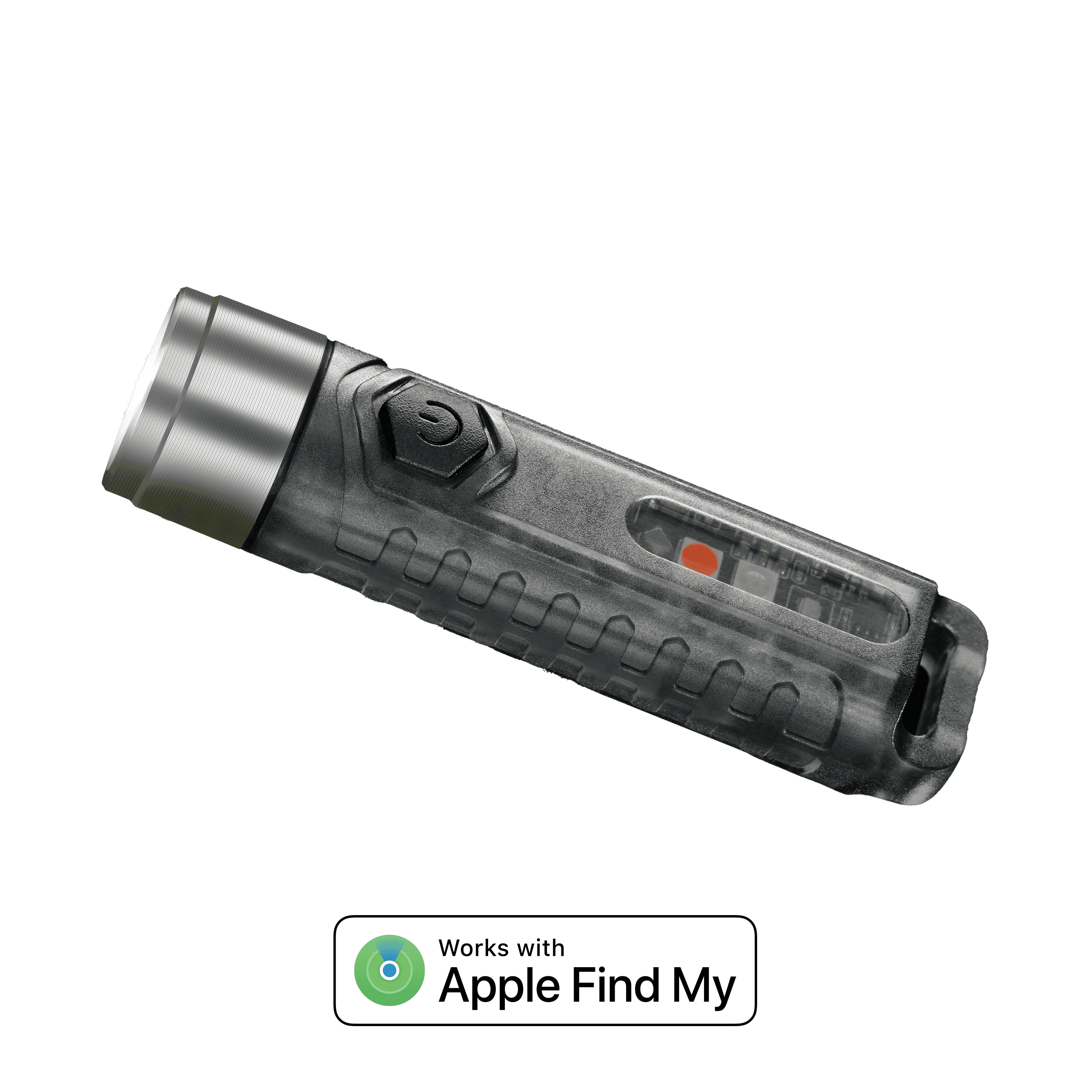
This is where FlashFinder quietly shines. Its semi-transparent body looks like a regular keychain accessory, not a tracking device. A pickpocket on a Lisbon tram or a thief eyeing your bag at a Bangkok night market sees nothing worth a second glance.
Meanwhile, it's tied into Apple's Find My network. If your bag walks off, you can trace it from your phone, using the global mesh of Apple devices to ping its location in real time.
Walking Back After Dark: The Other Half of the Problem
Securing your stuff is one thing. Securing yourself on a 10 PM walk from the metro station is another.
Safety experts who train solo travelers tend to repeat the same advice:
Walk with purpose. Look like you know where you're going, even when you're checking your phone for the third time.
Stay on lit, populated streets, even if it adds five minutes to your route.
Share your live location with someone back home before you start walking.
Carry a noise-maker. Personal alarms or whistles can stop a bad situation before it starts. Attention is the enemy of anyone with bad intent.
That fourth point is underrated. Predators rely on quiet. The fastest way to scatter trouble is to make yourself impossible to ignore.
A Pocket-Sized Deterrent
FlashFinder's dual-color red and blue alarm mode is built exactly for this. If someone follows you down an empty alley or you sense you're being cornered, you can trigger a flashing emergency-style lights.
It does two things at once:
Draws immediate attention from anyone within earshot or sight, which is the last thing a would-be attacker wants.
Disorients the threat, giving you precious seconds to move toward safety.
It's a tool you hope to never use. But carrying it changes how you walk through unfamiliar streets, and that quiet confidence is worth a lot.
One Keychain, Two Anxieties Solved
Solo travel will always come with risk. You can't engineer it away, but you can stack small advantages: smarter habits, better awareness, and gear that works for you instead of against you.
A tracker that doesn't look like a tracker. A flashlight that doubles as an emergency alarm. Both clipped to the same keyring you already carry. That's the kind of redundancy that lets you focus on the trip itself, not on what could go wrong.
[Shop FlashFinder now and travel with quiet confidence wherever you go.]
The thrill of stepping off a train in a city where no one knows your name is unmatched. But so is the sudden, stomach-dropping panic when you realize your daypack is still on that train, rolling away without you. Or the slow creep of anxiety as you walk a dim, unfamiliar street back to your Airbnb, phone battery dying.
Solo travel rewards the brave, but it also asks a lot. Here are the safety tactics seasoned travelers actually use, plus one small piece of gear that quietly does the work of three.
Securing Your Valuables Without Looking Like a Target
The first rule of travel safety: don't advertise. Flashy luggage tags, brand-name backpacks, and obvious tech gear paint a picture for opportunists in crowded transit hubs.
Instead, try these low-profile habits:
Split your assets. Keep cash, cards, and a backup ID in at least two separate places (one on your body, one in your bag).
Use a decoy wallet. A cheap wallet with expired cards and small bills can satisfy a mugger without giving up your real valuables.
Photograph your gear. Before you leave, snap pictures of your passport, electronics, and luggage. It speeds up police reports and insurance claims.
Track what matters. Drop a discreet tracker into your daypack, suitcase, and laptop bag.
That last one has become essential. The catch? Most trackers are obvious. A bright white plastic disc clipped to a zipper basically tells a thief, "Hey, this bag is worth stealing, and also, please remove this first."
Why Stealth Beats Flash
This is where FlashFinder quietly shines. Its semi-transparent body looks like a regular keychain accessory, not a tracking device. A pickpocket on a Lisbon tram or a thief eyeing your bag at a Bangkok night market sees nothing worth a second glance.
Meanwhile, it's tied into Apple's Find My network. If your bag walks off, you can trace it from your phone, using the global mesh of Apple devices to ping its location in real time.
Walking Back After Dark: The Other Half of the Problem
Securing your stuff is one thing. Securing yourself on a 10 PM walk from the metro station is another.
Safety experts who train solo travelers tend to repeat the same advice:
Walk with purpose. Look like you know where you're going, even when you're checking your phone for the third time.
Stay on lit, populated streets, even if it adds five minutes to your route.
Share your live location with someone back home before you start walking.
Carry a noise-maker. Personal alarms or whistles can stop a bad situation before it starts. Attention is the enemy of anyone with bad intent.
That fourth point is underrated. Predators rely on quiet. The fastest way to scatter trouble is to make yourself impossible to ignore.
A Pocket-Sized Deterrent
FlashFinder's dual-color red and blue alarm mode is built exactly for this. If someone follows you down an empty alley or you sense you're being cornered, you can trigger a flashing emergency-style lights.
It does two things at once:
Draws immediate attention from anyone within earshot or sight, which is the last thing a would-be attacker wants.
Disorients the threat, giving you precious seconds to move toward safety.
It's a tool you hope to never use. But carrying it changes how you walk through unfamiliar streets, and that quiet confidence is worth a lot.
One Keychain, Two Anxieties Solved
Solo travel will always come with risk. You can't engineer it away, but you can stack small advantages: smarter habits, better awareness, and gear that works for you instead of against you.
A tracker that doesn't look like a tracker. A flashlight that doubles as an emergency alarm. Both clipped to the same keyring you already carry. That's the kind of redundancy that lets you focus on the trip itself, not on what could go wrong.
[Shop FlashFinder now and travel with quiet confidence wherever you go.]
Related Articles
Check out our full product line
Check out our full product line

🇨🇦 A Canadian Company
© 2026 Futura Gear Inc. FTNT, the illustrated FTNT logo, and Footnote Accessories Co. are trademarks of Futura Gear Inc. All rights reserved.
© 2026 Futura Gear Inc. FTNT, the illustrated FTNT logo, and Footnote Accessories Co. are trademarks of Futura Gear Inc. All rights reserved.
🇨🇦 A Canadian Company