The "Trojan Horse" EDC: Why Your Anti-Theft Tracker Needs an Alibi
You did everything right. You bought the slim minimalist backpack, tucked a tracker into the laptop sleeve, and felt smug about your preparedness. Then someone walked off with it at a coffee shop, fished out the little white puck within 30 seconds, and tossed it in a sidewalk bin.
Your laptop is now a ghost. Your tracker is pinging a trash can on 5th Avenue.
This is the uncomfortable truth about modern anti-theft strategy: thieves have done their homework. If your protection looks like protection, it isn't protecting anything.
The Problem with "Obvious" Trackers
When Bluetooth tracking tiles first hit the market, they were a quiet advantage. Today, they're so recognizable that opportunistic thieves can identify them by touch alone. A quick pat-down of a stolen bag, and the most common trackers are out before the thief has even left the block.
This has created a strange paradox for everyday carry enthusiasts:
The more popular a tracker becomes, the less effective it is against informed theft.
Trackers designed to be "discoverable" by their owners are equally discoverable by everyone else.
Anti-stalking alerts, while important for safety, also notify thieves that they're being tracked.
The solution isn't to abandon tracking. It's to rethink what your tracker should look like.
Layered Defense: How to Actually Protect Your EDC in the City
Before we talk about gadgets, let's talk about strategy. A single tracker is not a security plan. Real anti-theft thinking is layered, and it starts with reducing the chances of theft in the first place.
Layer 1: Situational Habits
Never loop a bag strap over a chair. Keep it on your lap, between your feet, or with the strap wrapped around your leg.
Sit facing the door in cafes and co-working spaces. Visibility deters opportunists.
Avoid the "tech tax" silhouette. A bulky bag screaming "expensive laptop inside" is a target. Choose understated bags without prominent brand logos.
Layer 2: Physical Deterrents
Use locking zippers or small carabiners to slow down quick-grab attempts.
Carry valuables in internal compartments, not external pockets.
Consider a slash-resistant strap if you commute through dense crowds.
Layer 3: The Decoy Principle
This is where most people stop thinking, and where smart EDC really begins. If a thief succeeds in taking your bag, your goal shifts from prevention to recovery. And recovery depends entirely on whether your tracker survives the first inspection.
This is the Trojan Horse approach: hide the tracker in plain sight as something boring.
Why Disguise Beats Detection
A tracker that looks like a tracker gets removed. A tracker that looks like a keychain flashlight gets ignored.
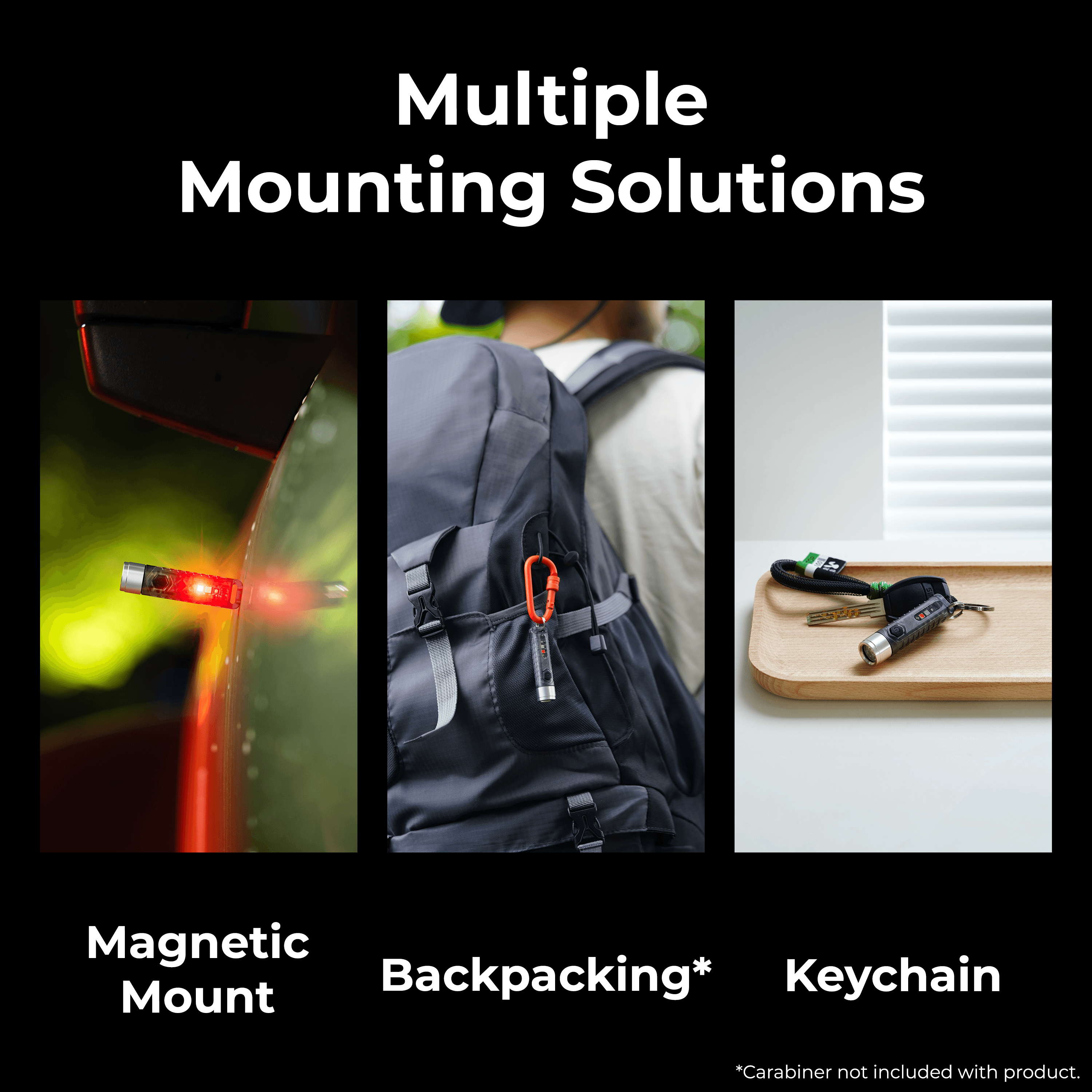
This is the entire premise behind FlashFinder, and it's why it earns a spot in serious EDC rotations. Its semi-transparent body is designed to read as a standard utility accessory, not a security device. To a thief rifling through a stolen bag in a back alley, it looks like a cheap LED light clipped to a zipper pull. Not worth pocketing. Not worth tossing.
The Apple Find My Advantage
The second piece of the puzzle is the network doing the tracking. FlashFinder uses Apple Find My integration, which means it taps into the hundreds of millions of Apple devices already in circulation. Every iPhone that walks past your stolen bag becomes a silent relay point.
A few things this gets you:
No third-party app for a thief to spot or disable.
Left Behind notifications that alert you the moment you walk away from your gear.
Precision tracking that works at city scale, not just within Bluetooth range.
The tracker isn't broadcasting "I'm a tracker." It's just quietly riding the network you already trust.
The EDC Mindset Shift
The best anti-theft tools aren't the loudest or the most aggressive. They're the ones that look like they don't matter. A keychain flashlight is one of those objects nobody thinks twice about, which is exactly what makes it the ideal carrier for tracking technology.
You get a functional everyday tool. You get a tracker that survives a thief's first pass. And you get to stop carrying a separate puck that everyone in your subway car can identify on sight.
Ready to upgrade your everyday carry with a tracker that actually stays hidden? Shop FlashFinder now and give your gear the alibi it deserves.
You did everything right. You bought the slim minimalist backpack, tucked a tracker into the laptop sleeve, and felt smug about your preparedness. Then someone walked off with it at a coffee shop, fished out the little white puck within 30 seconds, and tossed it in a sidewalk bin.
Your laptop is now a ghost. Your tracker is pinging a trash can on 5th Avenue.
This is the uncomfortable truth about modern anti-theft strategy: thieves have done their homework. If your protection looks like protection, it isn't protecting anything.
The Problem with "Obvious" Trackers
When Bluetooth tracking tiles first hit the market, they were a quiet advantage. Today, they're so recognizable that opportunistic thieves can identify them by touch alone. A quick pat-down of a stolen bag, and the most common trackers are out before the thief has even left the block.
This has created a strange paradox for everyday carry enthusiasts:
The more popular a tracker becomes, the less effective it is against informed theft.
Trackers designed to be "discoverable" by their owners are equally discoverable by everyone else.
Anti-stalking alerts, while important for safety, also notify thieves that they're being tracked.
The solution isn't to abandon tracking. It's to rethink what your tracker should look like.
Layered Defense: How to Actually Protect Your EDC in the City
Before we talk about gadgets, let's talk about strategy. A single tracker is not a security plan. Real anti-theft thinking is layered, and it starts with reducing the chances of theft in the first place.
Layer 1: Situational Habits
Never loop a bag strap over a chair. Keep it on your lap, between your feet, or with the strap wrapped around your leg.
Sit facing the door in cafes and co-working spaces. Visibility deters opportunists.
Avoid the "tech tax" silhouette. A bulky bag screaming "expensive laptop inside" is a target. Choose understated bags without prominent brand logos.
Layer 2: Physical Deterrents
Use locking zippers or small carabiners to slow down quick-grab attempts.
Carry valuables in internal compartments, not external pockets.
Consider a slash-resistant strap if you commute through dense crowds.
Layer 3: The Decoy Principle
This is where most people stop thinking, and where smart EDC really begins. If a thief succeeds in taking your bag, your goal shifts from prevention to recovery. And recovery depends entirely on whether your tracker survives the first inspection.
This is the Trojan Horse approach: hide the tracker in plain sight as something boring.
Why Disguise Beats Detection
A tracker that looks like a tracker gets removed. A tracker that looks like a keychain flashlight gets ignored.
This is the entire premise behind FlashFinder, and it's why it earns a spot in serious EDC rotations. Its semi-transparent body is designed to read as a standard utility accessory, not a security device. To a thief rifling through a stolen bag in a back alley, it looks like a cheap LED light clipped to a zipper pull. Not worth pocketing. Not worth tossing.
The Apple Find My Advantage
The second piece of the puzzle is the network doing the tracking. FlashFinder uses Apple Find My integration, which means it taps into the hundreds of millions of Apple devices already in circulation. Every iPhone that walks past your stolen bag becomes a silent relay point.
A few things this gets you:
No third-party app for a thief to spot or disable.
Left Behind notifications that alert you the moment you walk away from your gear.
Precision tracking that works at city scale, not just within Bluetooth range.
The tracker isn't broadcasting "I'm a tracker." It's just quietly riding the network you already trust.
The EDC Mindset Shift
The best anti-theft tools aren't the loudest or the most aggressive. They're the ones that look like they don't matter. A keychain flashlight is one of those objects nobody thinks twice about, which is exactly what makes it the ideal carrier for tracking technology.
You get a functional everyday tool. You get a tracker that survives a thief's first pass. And you get to stop carrying a separate puck that everyone in your subway car can identify on sight.
Ready to upgrade your everyday carry with a tracker that actually stays hidden? Shop FlashFinder now and give your gear the alibi it deserves.
Related Articles
Check out our full product line
Check out our full product line

🇨🇦 A Canadian Company
© 2026 Futura Gear Inc. FTNT, the illustrated FTNT logo, and Footnote Accessories Co. are trademarks of Futura Gear Inc. All rights reserved.
© 2026 Futura Gear Inc. FTNT, the illustrated FTNT logo, and Footnote Accessories Co. are trademarks of Futura Gear Inc. All rights reserved.
🇨🇦 A Canadian Company